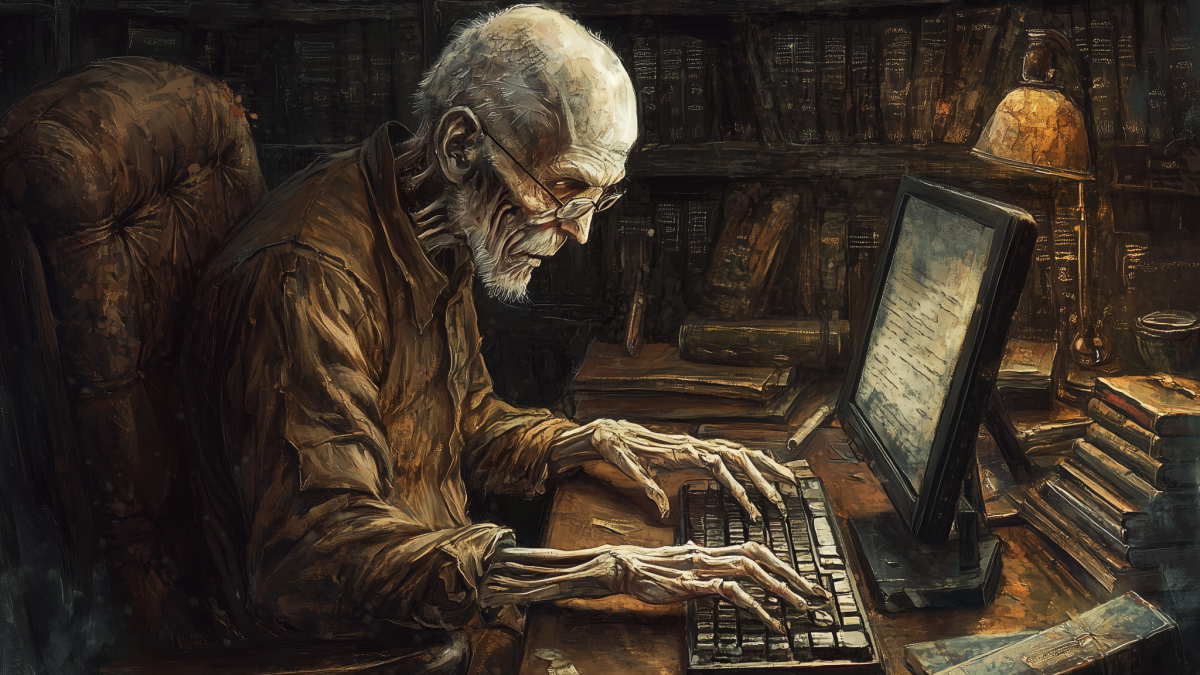
As an author, one of the most challenging questions isn’t how to begin a book, but when to finish it. In my experience, the decision to publish rarely comes from a sense of completion or perfection—it comes from sheer exhaustion.
Writing a book is an all-consuming process. While the story remains unfinished, it never truly leaves your mind. It’s there when you fold laundry, cook dinner, or try to sleep. It lingers in every waking moment, often making it hard to focus on anything else. Even socializing can be difficult because the book dominates your thoughts. You want to talk about it, but no one else can truly engage with an unpublished work—they haven’t read it, and you don’t want to be the person who only talks about yourself. Yet, the story stays with you, insistent and relentless, refusing to be ignored.
The process itself feels never-ending. You write, re-read, revise, and then revise again. New ideas emerge, leading to further rewrites, and each iteration seems to reveal new flaws to fix. At some point, the cycle becomes exhausting, and you reach a crossroads. Not because the book feels perfect, but because you’ve reached the limit of what you can give it at that moment. That’s when you decide, “It’s time to publish.” The relief is immense—a heavy weight lifted as you finally let the story go.
But the journey doesn’t end there. Months later, you pick up the finished product and read it with fresh eyes. That’s when the editor in you awakens, noticing sentences that could be smoother or ideas that could be clearer. You find yourself cringing at overused words and wondering how you missed them before. The urge to revise returns, and sometimes, the need to republish a revised edition feels unavoidable.
This is the paradox of writing. On one hand, you feel compelled to honor the work you’ve already completed, to refine and perfect it. On the other, new stories are clamoring to be written, and revisiting an old work keeps you from moving forward. While revising and improving a book can be rewarding, it’s also a tedious process that demands time and energy. If done too often, it risks trapping you in an endless cycle with the same project.
At some point, you have to let the work stand as it is—imperfections and all—and trust that it’s enough. Learn from the errors of your earlier books, and use those lessons to make the next one better. Otherwise, you risk being forever tethered to the first book you published, unable to move forward.
A book is never truly “finished,” but it is complete when you’ve given it all you can for now. Letting it go is a necessary part of the creative process, allowing you to grow as a writer and make space for the new stories that are waiting to be told.